I’ve always been of the mind that good writers should read a lot. And not just books, but pretty much everything they can get their hands on. I used to read brochures, marketing copy, advertorials, flyers, short stories and poetry.
Now?
Pretty much just magazines and stuff on the web. I’m not proud to say it either.
When I think about why, the same old story comes up–three words people use when they don’t have a better excuse–“I’m too busy”. But really? Isn’t that a lame way to say I just don’t make the time anymore?
I’ve decided to remedy this in the coming year. I’m not trying to get back to the days where I used to read 100 books a year (yes, it’s true–and I kept a running list of them too!), but I am committing to increasing the effort I put forth in terms of trying to read more. And just in case this has happened to you too, I”m going to share three little things I’m doing to up the time spent with my nose in print:
Put a book in the car. This is handy. I read when I get stuck by a train. I can grab my book and take it in with me if I stop for a cup of coffee. Bottom line is–it’s there if I have a spare minute or two. I’ve already read a book this way!
Get a few subscriptions. Even though I’m already reading magazines, reading more of them still counts. I’ve subscribed to a few and am going to flip through them in the evenings while I unwind.
Utilize your local library. I’ve gotten out of the habit of going to the library. Used to do it all the time. I’d read the backs of books to find one I liked, check it out and commit to reading the first two chapters to see if I liked it. It’s also a great place to sit and read. Quiet and comfortable.
What about you? Do you have any tips you can share with me–and with FZ readers? Are you still reading? Or are you like me–finding that it’s a challenge with all the things you do in a day…?
Instead of doing what I used to do, which was writing and editing directly in Word, I’ve been using Google Docs to do first drafts, then save them to the hard drive at the end of the session using the Download As feature.
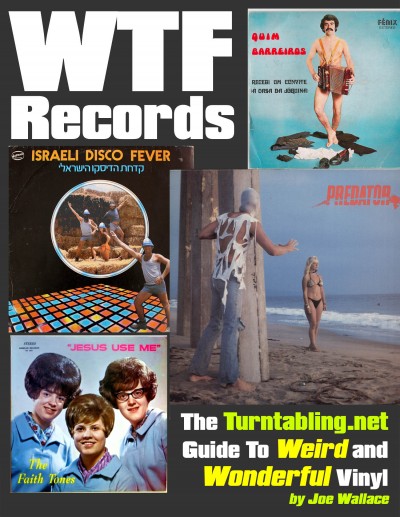
I’ve got several chapters I’m working on at once because the book, which is a collection of reviews of bizarre and strange vinyl records, has a variety of categories. I put on the records and re-orient myself with them as I’m writing and the pile always crosses several categories, so it’s not quite a linear book writing experience–definitely one that is assembled from its various components.
In other words, FRANKENBOOK!
The experiment is going well–the most valuable thing in Google Docs when working this way is the ability to download several documents all at once as a zipped file. I find that when I’m off in a coffee shop somewhere or on the road and want to do a quick revision on a section I wrote earlier, having it all in Google Docs is a major convenience. Also, it eliminates the worries about hard drive crashes and the like since I always have a copy backed up online.
Of course, if Google Docs crashes AND my hard drive dies, I’m stuck–but that’s a good argument for using a zip drive to backup the backup.
Today we have another interview to share with you….please welcome author Delphine Pontvieux…
1. How did you wind up a writer?
I always enjoyed writing, and I am also an avid reader. When I was a teenager, I used to write short stories on an electronic IBM typewriter my dad gave me (to replace my mechanic typewriter in the mid 80s.) Then, after university, I started working. Other than writing marketing plans, I did not get much creative writing done. Then, a few years ago, I was asked to write a series of articles for a scuba diving publication. i realized how much i enjoyed writing them, thus i started writing more articles for other magazines. Then one day I woke up from a dream I definitely needed to put down on paper, which i did. That’s how I realized, four chapters in, that I was writing a novel…and that was how it happened.
2. Was the road to being a writer what you expected? Why or why not?
Yes, for the most part. It’s a solitary road. It eats up all of your free time. Forget trying to quit smoking while writing a novel. But you also meet awesome people you would have never met otherwise. It is a very tough, yet, rewarding, adventure in the end.
3. What has been your best moment or biggest accomplishment as a writer?
Without hesitation, the day I received a shipment of 3,000 hardcover books written by…me! I broke open a box from the top of the pile and took out a book… The adrenaline was flowing through my veins as I looked at the cover and opened the book to a random page (mostly in fear of finding out that the text would be upside down or who knows what other tragic printing mistake I would find in there). When I saw that all looked good, my hands continued shaking, this time because I was so happy and proud to be holding my own book in my hands.
4. What has been your most difficult moment?
I honestly can’t think of a difficult moment. There are many instances when I feel a little demoralized because I wish I was further ahead, I wish all my promotion and marketing efforts would bring me more exposure than they do, but at the end of the day, it’s all been a very positive experience. So many good things have happened to me since I published my novel, the feedback and reviews I keep on receiving are very good, and I have met amazing people along the way. I still enjoy writing more than ever… I really can’t complain.
5. Can you share your top piece of writing advice with Freelance-Zone readers?
Write for the love of writing first, and the pleasure and sense of achievement it brings you before you write for any other purpose.
BIO: Delphine Pontvieux was born in Versailles and grew up in France. She studied at Stetson University in Deland, Florida and graduated from the University of Burgundy in Dijon. She also lived, studied and worked in Australia, the USA, Spain and the Netherlands until she moved to Chicago, Illinois, in 1998, where she still lives today. She has 10 years of international sales and promotion experience in the music and entertainment industry.
Delphine Pontvieux was the recipient of the “2010 French in Chicago Community award” Oscar in the category “Arts and Culture” and recently won the Indie Excellence Book Award 2011 in the Thriller category for her novel, a political thriller titled ETA-Estimated Time of Arrest. Follow Delphine Pontvieux’s acting career on imdb.com
Here’s info about her latest work…
OUT NOW: “ETA – Estimated Time of Arrest”, a novel by Delphine Pontvieux
For much of the past year, I’ve been laying the groundwork for something called the Note Project. It officially “launches” on April 18, but for all practical purposes, it’s up and running now. If you haven’t already visited the Note Project website at http://NoteProject.com, please take a minute to do so. There are a couple of good reasons for you to take a look if you are a writer.
The first reason is that the Note Project involves writing. In this case, it’s about writing notes of appreciation. It’s a project that was inspired by a note I received from my youngest sister, thanking me for something I did years ago. My goal is to encourage and inspire other people to share notes of appreciation. There’s no cost to participate, so if you want to help the cause (and make someone in your life feel appreciated), please take a moment to pledge to send a note. Your pledge will count toward our goal of 1 million notes, which we believe will “make the world a million times better.” And if you really like the idea of the Note Project, you can support us by purchasing an optional “Note Project Starter eKit” for $1. You’ll get a lot of helpful tips and inspiration for your dollar, and a share of the proceeds will be donated to support literacy projects around the world. You can also donate directly to the literacy projects if you’re not interested in an eKit.
The second reason I recommend that writers check out the Note Project is that this project has much in common with a book launch. In fact, the person who is managing the launch of the Note Project specializes in campaigns aimed at getting new books onto Amazon bestseller lists. Continue reading Anatomy of a Launch→
The headline is a quote from Gretchen Little in her Squidoo.com review of John Rember’s book, MFA in a Box. If you are a serious writer, or if you have dreams of being a serious writer, I highly recommend this book.
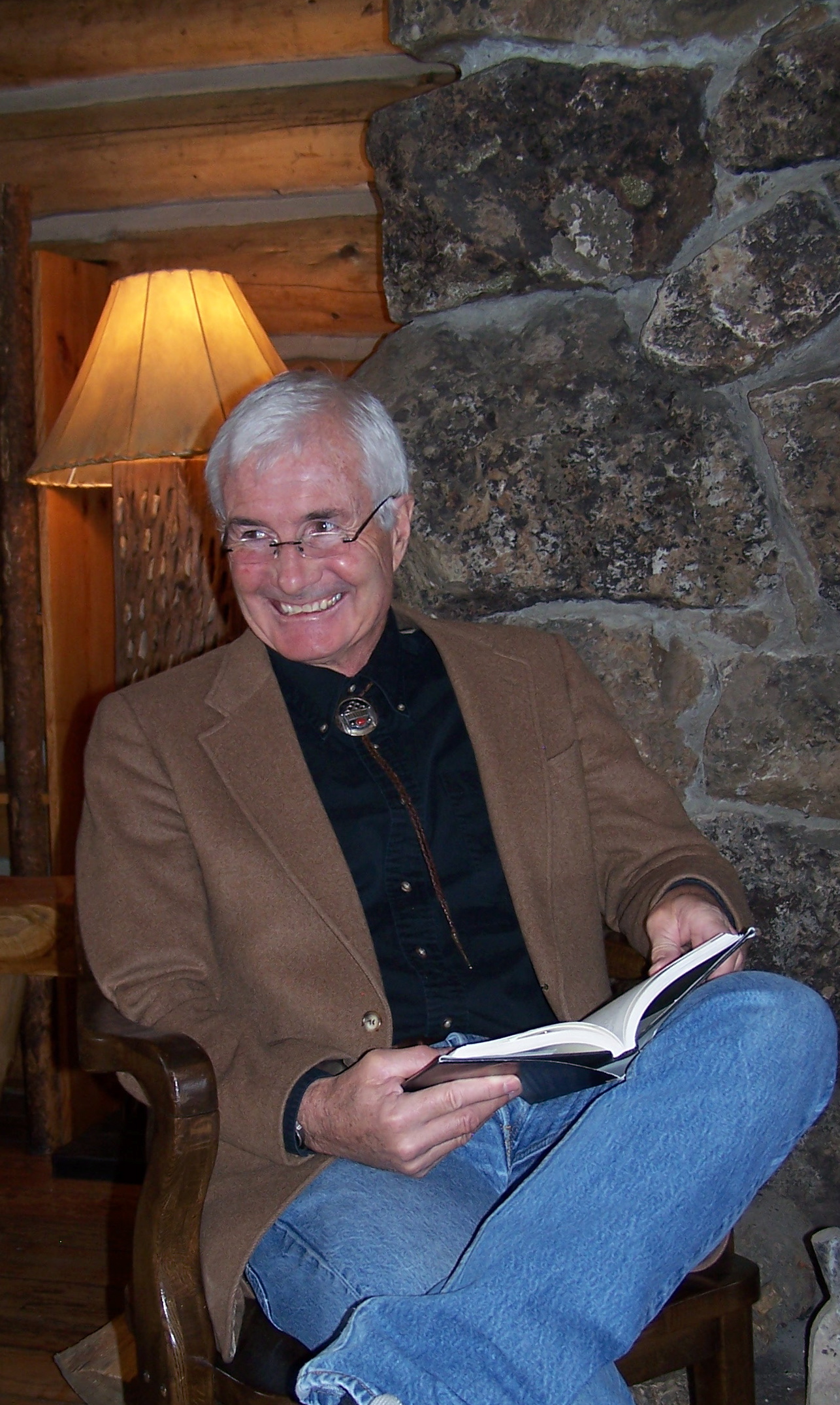
I also highly recommend signing up for John’s free MFA in a Box newsletter about writing. John has been a professor of creative writing for many years, and he is author of four books. In his newsletter, he plans to share his thoughts on creative writing, what it means to be a writer, and “the weirdness of everyday life.” You’ll get some of the most thought-provoking and lucid prose you will ever read, along with a relentless sense of irony, and John’s subtle sense of humor.
Full disclosure: I am John’s publisher, so I will actually make a few dollars if you buy a copy of his book. But don’t buy it for that reason. Buy it because as another reviewer said, “It makes me want to write, helps me find the courage to do so, and allows me see the purpose in the hard work of it.” And don’t forget to sign up for the free newsletter. It will be one of the best things you’ve ever done for the writer in you.
Today we have a special feature on a book that will help you become a better editor when it comes to refining your own work. Since this skill isn’t the easiest to master, editor/author Sigrid Macdonald decided to write a book on the subject. Here are the details in an interview with Sigrid…
1. The name of the book is “Be Your Own Editor”, so it’s probably best to start by asking what led you to write this book? Give us a little background and some history behind the inspiration.
I’ve been a writer for several decades. I started out doing articles for political organizations and op-ed pieces for the newspaper. Then I moved on to writing for magazines and finally, I wrote books. After I finished my first book, I was hired by a local company to be a manuscript editor. I knew nothing about editing but I was confident about my skills because I had been writing for so long — that faith in myself was misplaced!
Editing and writing require completely different skill sets. They look and sound as though they should be the same, because in many respects, editing is just like rewriting. On the other hand, writing involves a creative process of putting your ideas on paper, but editing involves the meticulous review of everything you’ve written to make sure that it’s structurally and grammatically sound and accurate.
In the old days, pretty much everyone who wasn’t a professional writer edited his or her own material. For example, most college and university students would never have considered hiring a proofreader or editor to go over their essays.
Nowadays, things have changed. Higher expectations are placed on students by professors in postsecondary education, yet many of the fundamentals of English composition and grammar are not being taught properly in the early years. Many of us are writing on websites, in the blog community or even self-publishing books. No one edits that work, whereas a professional writer can submit an article to a magazine, and the magazine editor will kindly and quickly remove any typos or awkward structural or grammatical problems. Not so when we do these things ourselves. Consequently, we may miss all kinds of redundancies, inconsistencies, misused words or poorly phrased sentences.
Be Your Own Editoris the book I wish that I’d had when I made the transition from writer to professional editor. I wrote it in order to share what I’ve learned about editing. So often, I receive inquiries about my services from people who can’t afford to hire me. That makes me feel really bad because my background is in social work and I want everyone to have access to services. This book is meant for all those talented, dedicated writers or students who can’t afford to hire a pricey editor, and could do a perfectly good job themselves if they put in a little extra time and effort brushing up on the basics of grammar and organization.
2. How did you discover the techniques you recommend in the book and perfect them? How specifically have they contributed to your success?
Many of the techniques in the book are quite simple. I talk about the need for consistency and clarity. I discuss how to compose an essay, blog post, article or nonfiction book. And I go into great detail about frequently misused words such as affect or effect, further and farther or between and among. I discovered all these things by either making mistakes in my own writing or catching them in my clients’ works. Continue reading Top Editing Tips From A Pro→
Chicago-based content writing, editing, and social media. 1579 N. Milwaukee #220, Chicago Illinois 60622

 For much of the past year, I’ve been laying the groundwork for something called the Note Project. It officially “launches” on April 18, but for all practical purposes, it’s up and running now. If you haven’t already visited the Note Project website at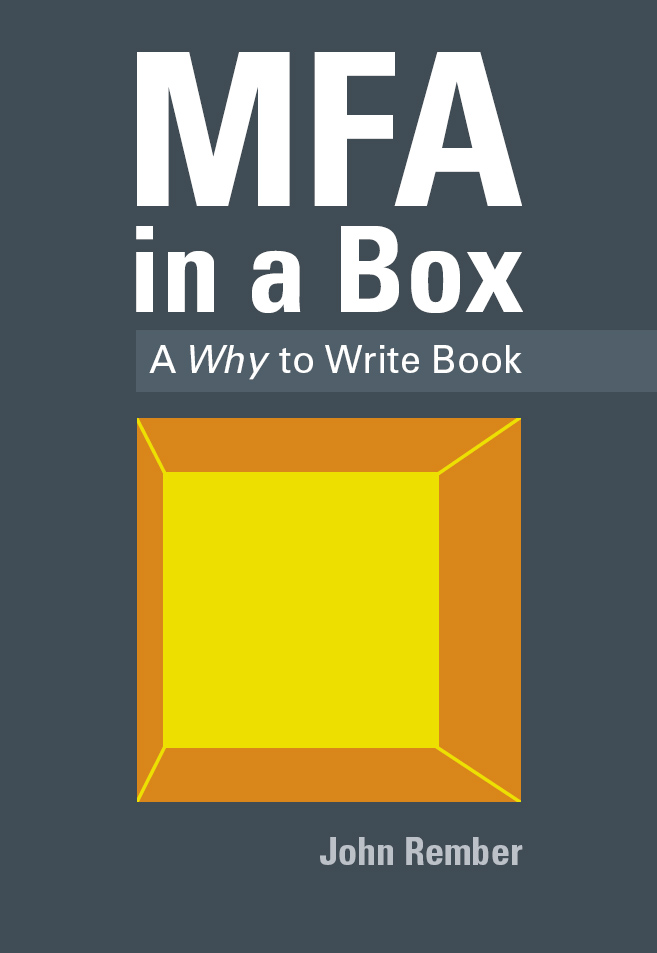
 The headline is a quote from Gretchen Little in her