Home » freelance writing » Recent Articles:

Sometimes You Have To Tell The Client NO

Joe-Wallace-Vinyl-Collector-and-authorby Joe Wallace

I love my clients. I have just the right amount of them, the projects are diverse and interesting, and I have good rapport with them. Over the long haul, there have been suggested changes, tweaks, alterations to the work flow, content, the usual course corrections that come with any long-term relationship.

And like any long term relationship, there are suggested directions that turn out to be bad ideas, and some that are just plain untenable from the start.

In my early days as a freelancer, I used “the customer is always right” motto until it became apparent to me that, even as a writer (as opposed to a writer/editor/sound designer/social media promoter, blah blah) the clients often turn to me as a subject matter expert and informal advisor–even when they don’t realize they’re doing so. That’s about the time I started saying no to ideas that don’t work, are too ambitious, or just plain bad.

In a sushi bar in downtown Chicago this week, I overheard two lawyers talking shop. Some of the best-ever advice for freelancers came from my shameless “accidental” overhearing of the following paraphrased statement.

“I tell them two things: I say, ‘this is my role and in my professional capacity I will tell you A, B and C about what you’re asking. Now I’m going to step outside my role as your professional and I’m going to tell you what I personally think about this scenario based on my prior experience with it. I do this to let you know that in my professional capacity with you, I’ll give you the advice you need–but I’ll also tell you off the record whether it’s practical in the real world.’ ”

I’ve done quite a bit of that myself, albeit in less direct ways–but I’m starting to think I should take my cues from a lawyer in a sushi bar and start couching it in those terms.

–Joe Wallace

Freelance Writing About Music

September 26, 2012 advice, blogging No Comments

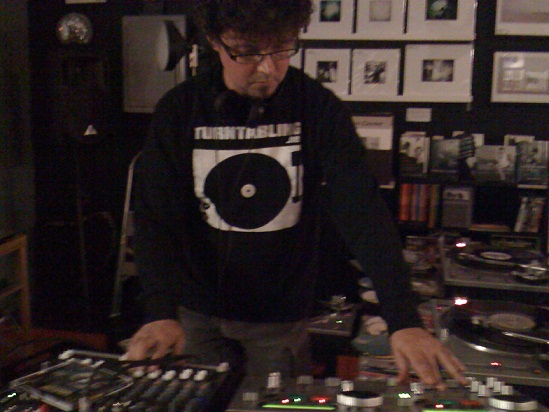
DJ PAISLEY BABYLON gig at Transistor Chicagoby Joe Wallace

I’ve written more music-related material than I can count–from LP and show reviews to critical drubbing and snark about lousy album covers, even some how-to recording advice, I’ve written myself around the block when it comes sound.

My music writing work is based on personal experience as a performer and recording artist, but also as a rabid collector of many genres including dub, electronica, new wave, post-punk, early experimental and industrial recordings, and a genre of LPs I can only describe as “WTF??”

A lot of people want to know how to break into music writing, and honestly, there are a couple of basic things you should do to help yourself–but they are for NO PAY. It’s just the nature of the beast in music writing circles. Get used to it. But it’s best to write for free…for yourself.

I should also caution aspiring music journos that there is NOT a lot of money in obvious places when it comes to writing about music when you DO get paid. A lot of the music business people I know or know of who have made it onto the printed page for a fee are either capitalizing on their earlier success as performers (built in fan base), writing from their direct experience writing, recording and performing, OR they have written about areas on the fringes of music but still connected.

One of my instructors in the Recording Arts program at Tribeca Flashpoint Media Academy has written two books–not strictly about music, but about Tiki culture in America and related topics. His music experiences did help him write these books–apparently whenever he was on tour with the bands he worked with, he made side journeys to find local tiki bars…research for the book he didn’t know he was writing just then.

Back to freelance music journalism.

The best advice I can give to anyone who really, really REALLY wants to write about music for a living is to start now by ramping up a music blog and pouring the reviews on quite liberally. No, you aren’t getting paid, but you WILL be developing your music chops and building an audience–two really important skills to hone as a music journalist.

To make such a blog successful, you should pay a lot of attention to your local and regional music scene. Soon you’ll be getting guest listed on local shows, receiving review copies and downloads and entrenching yourself into the local music scene. There are many other bits of advice I’ve scraped up along the way, but those are two of the best career kickstarter type things you can do in the earliest days.

Networking in your own back yard is so very, very important. But social media and making contacts with other music writers, editors, and PR folks is just as important. View your music writing career like a very long ladder and you get an idea of what to expect in all these areas. One foot goes above the other…one rung at a time.

Joe Wallace is a multi-media professional. He writes, shoots, edits, does sound design and a whole lot more. He is currently too busy to breathe, balancing a full-time freelance writing career with his full-time studies at Tribeca Flashpoint Media Academy in the Recording Arts for Film program there. Wallace accepts new writing work on a very limited basis, but is happy to consider film, broadcast, and online media projects. Contact him: jwallace@joe-wallace.com

Four Essential Components for Finding Your Freelance Zone

September 24, 2012 advice No Comments

CleanWellLighted

Although there are many paths to freelancing success, as ho-hum as it may sound, developing a routine is the keystone of a successful freelance writing career. Foolish consistency is the hobgoblin of little minds, but wise consistency equals profitable productivity. With that goal in mind, it is also imperative that you set up a quiet, comfortable, efficient workspace and spend as many hours as possible in it.

A Clean, Well-Lighted Place: The first step in establishing yourself as a successful freelance writer is to create a place of your own in which to ply your craft. Your workspace should be convenient, inviting, and absolutely off limits to everyone except you. While this may be impractical or even impossible in many households, anything less will only create chaos and conflict. Although not ideal, your creative space could be something as simple as a lap desk and a comfy chair in a corner of the living room, a roll-top desk in your bedroom, or even a cozy cubby in a spacious closet. No matter how humble or small, stake your claim on a few square feet of the family real estate and hang up your ‘No Trespassing’ sign.

First Thing in the Morning: Once you’ve marked your territory, it’s time to get started on your routine. As soon as you’re awake in the morning and put your feet on the floor, your private workspace should be the first place you go; although a small detour to the bathroom, with a brief stopover at the coffee maker are perfectly acceptable. Just be sure you don’t get sidetracked along the way. If you have children who begin vying for your attention first thing in the morning, then it’s important that you wake up a few minutes before they do, to focus your mind and get your day started. Even if you don’t begin writing right away, that first focus will set the tone for your whole day.

The Hours: For many if not most freelance writers, time management is the most crucial yet difficult element of their lives. Chances are, unless you fit the perfect stereotype for a freelance writer (you’re single, childless, live alone, do not have a close-knit family, and you’re not romantically involved), life can be both hectic and complicated. And as a freelancer, the people in your life may tend to view you and your workday as endlessly flexible and available to accommodate their every whim. This can be a huge disruption and a source of conflict. But if you truly hope to make a living as a freelancer, carving out several hours a day to focus your undivided attention on writing is an absolute must. Of course, everyone’s schedule, lifestyle, and creativity patterns are unique, so each individual freelance writer will have to arrange an ideal routine. Maybe your best time for writing is during the day while the children are at school. Or maybe you prefer doing your errands and physical activities in the afternoon, and your writing in the evenings when it’s quiet and the cares of the day are behind you. Perhaps you need long, uninterrupted blocks of time and can arrange your lifestyle accordingly. Or maybe you are adept at multi-tasking and can write for a couple of hours between bursts of phone calls and household chores. Whatever suits your creative temperament is perfectly acceptable, as long as it allows you to be abundantly productive.

Last Thing at Night: The last piece of the puzzle is a few quiet moments at the end of the day to develop tomorrow’s agenda. This is the time for setting goals, making lists, jotting down ideas and looking back at what you’ve accomplished today. Waking up with a clear map of where you’re headed each day is a surefire way to facilitate your success as a freelance writer. So, sit down for a few minutes before bedtime each evening and make a to-do list for tomorrow.

*Content for this article is adapted from Celeste Heiter’s Amazon Kindle ebook Turn Your PC into a Lean Mean Freelancing Machine.

Wanna Be Headhunted?

Joe-Wallace-Vinyl-Collector-and-authorby Joe Wallace

I’ve got a super-busy schedule these days; my writing gigs have increased exponentially, I’m enrolled in the Recording Arts program at Tribeca Flashpoint Media Academy here in Chicago, and I’m working the post-production end of my short film, 45 RPM.

So naturally, I have absolutely no time whatsoever to consider the gig that was offered to me today via e-mail; a digital managing editor slot for a startup near me.

I didn’t apply for this gig–far from it–it came to me in my inbox today from a creative placement agency. I didn’t have to wonder how they found me, as I’ve got a little strategy to help me track where my random e-mails come from and how I’ve been discovered on the Internet.

My resume site for my work in multi-media has a site-specific e-mail address. So does my writing-specific resume site. Ditto for my vinyl blog Turntabling.net and my filmmaking blog Now-Sound.com.

The headhunter found me, oddly enough, via my multimedia resume page. So it’s likely the headhunter did a keyword search for a set of specific terms and my site wound up in the page one or page two results.

If you want to be discovered this way, there are plenty of ways to do it–mine includes having a resume page that’s been online at the same address for a very long time, using SEO-optimized resume writing techniques, along with plenty of images also with SEO optimized filenames. But none of this is my point, really.

If you really want to open up some additional freelance options for yourself, I strongly suggest you check out the creative temp agencies in your market. They can be an important source of income for a creative freelancer. Some of my highest profile and best-paying work has come from agencies, and I did some good work for these household name-type companies.

If you’re frustrated with a lack of work, a creative temp agency might just open up some new income potential for you. I have no time whatsoever to consider the position e-mailed to me today, but maybe YOU do.

Joe Wallace is a writer, editor, indie filmmaker, multi-media artist and time management fanatic. He has many projects going at once, and has finally realized he’s not truly happy unless he’s beating deadlines, rushing for trains, calculating the amount of remaining natural light, editing video, and planning his next recording session all within the same day. He blogs about filmmaking at Now-Sound.com.

Team Collaboration For Creative Freelancers

September 12, 2012 advice, editorial No Comments

Filmmaking Film production freelance sound designby Joe Wallace

Over the summer, I decided I wasn’t busy enough and enrolled in the Recording Arts for Film program at Tribeca Flashpoint Media Academy. The program began this week with orientation and on Day Two, we got right into things with a team-building exercise designed to help people understand just what they are getting into at the schoolhouse.

I am certainly not the only non-traditional (read, “older”) student there, but as we divided up into teams it was clear that the experienced students were spread around the room, giving us ample opportunity to make choices about how to proceed with the first team building exercise–a video project that required a quick bit of writing, some video capture, sound design and editing.

I’ve got boatloads of experience in these areas, but rather than dive right in and start organizing the team I was assigned to, I thought it might be slightly less egotistical–and a lot more educational–to simply wait for someone else to volunteer to take charge, take direction from them, and watch the team dynamic evolve.

And did it ever! We made some of the classic newcomer mistakes–letting one person take the lead (not me) for writing, directing, and producing and then sorting out the mayhem when that started to go awry. What was really great was watching the youngest team members–some right out of high school–begin to find their leadership legs when it was clear that nobody was going to jump in to save the day. (Not that they expected someone to do that, mind you….)

If a more experienced student had herded the group down the “right” path, none of that would have gotten to happen. It would have been easy to say, “You do THAT because you have experience with THIS, and you go take care of A and B in the script while WE undo problem C and D.”

Instead, the group evolved and team leadership roles developed organically–you could literally see the changes in attitude start to happen as the problems got fixed, the issues worked out, and the players finding their collaborative legs.

When you’re on a freelance creative team with many newcomers and new-to-the-field people, there’s a time to steer the ship with more experienced hands, and there’s a time to let people stretch beyond their comfort zones. The trick is knowing which is which. Leading a team of creatives–freelance or not–means finding the balance for the benefit of both the project and those working it.

Tribeca is a media arts academy, and while some might not see the relevance in any of this to the freelance life, I should point out that they tell you in orientation that a great many jobs waiting for those who graduate this two-year program are freelance by nature rather than staff positions. So for me, at least, this adds a whole new dimension to my work and my writing about the freelance life. Expect more multi-media musings from me here as they relate to freelance work, the coursework I’m involved with at Tribeca, and etc.

–Joe Wallace

Recycling Your Own Content

August 24, 2012 advice No Comments

By Mandy Smyth ConnorImagine Book

Jonah Lehrer, hugely popular author of “Imagine; How Creativity Works,” admitted last month to falsifying quotes from Bob Dylan. After further research, it was uncovered that his facts were flimsy at best, totally incorrect at worst. Finally, it was revealed that he had re-purposed and recycled a large amount of his previously published work, essentially receiving payment for work that he stole….from himself.

This raised a huge amount of controversy regarding Lehrer and other journalists in the field, and the lynch mob formed outside his door. Yet as the story developed, something remarkable happened – many supporters, and fellow journalists, demanded sympathy on Lehrer’s behalf. Supporters called upon others to show compassion for a young journalist who painted himself into a corner where he felt pressured to write another successful book with a turnaround time that would come hot on the heels of his previous successes in the publishing world (“hot on the heels” by publishing standards.)

In light of this controversy, I initially took up a torch and sided with the lynch mob. How could he possibly misquote Dylan?! DYLAN IS STILL ALIVE! Anyone could simply call up Dylan’s people to verify the quotes! And his falsified “scientific reasoning” based on neuroscience could obviously have been (and was) dis-proven by authorities in the field. Anyone with access to Google can search for his work and find duplications. So how then could he have been so brazen as to think that he would not be caught?

But over the past few weeks, I’ve found myself feeling more compassion as I realized that I too have used my own previous work as inspiration for blog posts, articles and speeches. Now, I am no a professional author, nor am I backed by a hugely successful publicist and publishing house. It’s easy enough for me to validate having used my own work in a recycled fashion because there is such limited exposure to what I write. But at what point have I committed a crime? Does a writer owe it to his readers to publish work that is original in thought and execution at all times? Or have you, like Lehrer, ever found yourself using previous work as inspiration for future work? And no, I’m not talking about cutting and pasting exact text, but I am talking about repurposing writing and thoughts.

I’m not asking you to show compassion for such blatant laziness in reporting. I am asking you to look back on your own writing, when it was midnight, you were under deadline, behind schedule and totally devoid of inspiration. Have you been guilty of this crime, if only to a lesser extent?

Share your opinion on this. We’d love to hear from you.

Hire Us

Joe Wallace and Catherine L. Tully are currently available on a limited basis for lectures, talks, coaching and mentoring on the business and craft of freelance writing.

They also do consultant work on a per-project basis for websites, small businesses, and corporations on everything from website content to social media. Please send a detailed e-mail to editor (at) freelance-zone (dot) com and allow at least 24 hours for a reply.

A Writer’s Digest Best 101 Websites for Writers Site

Privacy Policy

Freelance-Zone.com uses a privacy policy similar to Google's. Read our privacy policy for more information.
Office Genie

The Well-Fed Writer